Investigation: Could an Ancient Japanese Ritual Really Explain Why So Many People Struggle to Lose Weight?
IMPORTANT HEALTH UPDATE May take up to 10 seconds to load.
Make sure your sound is on
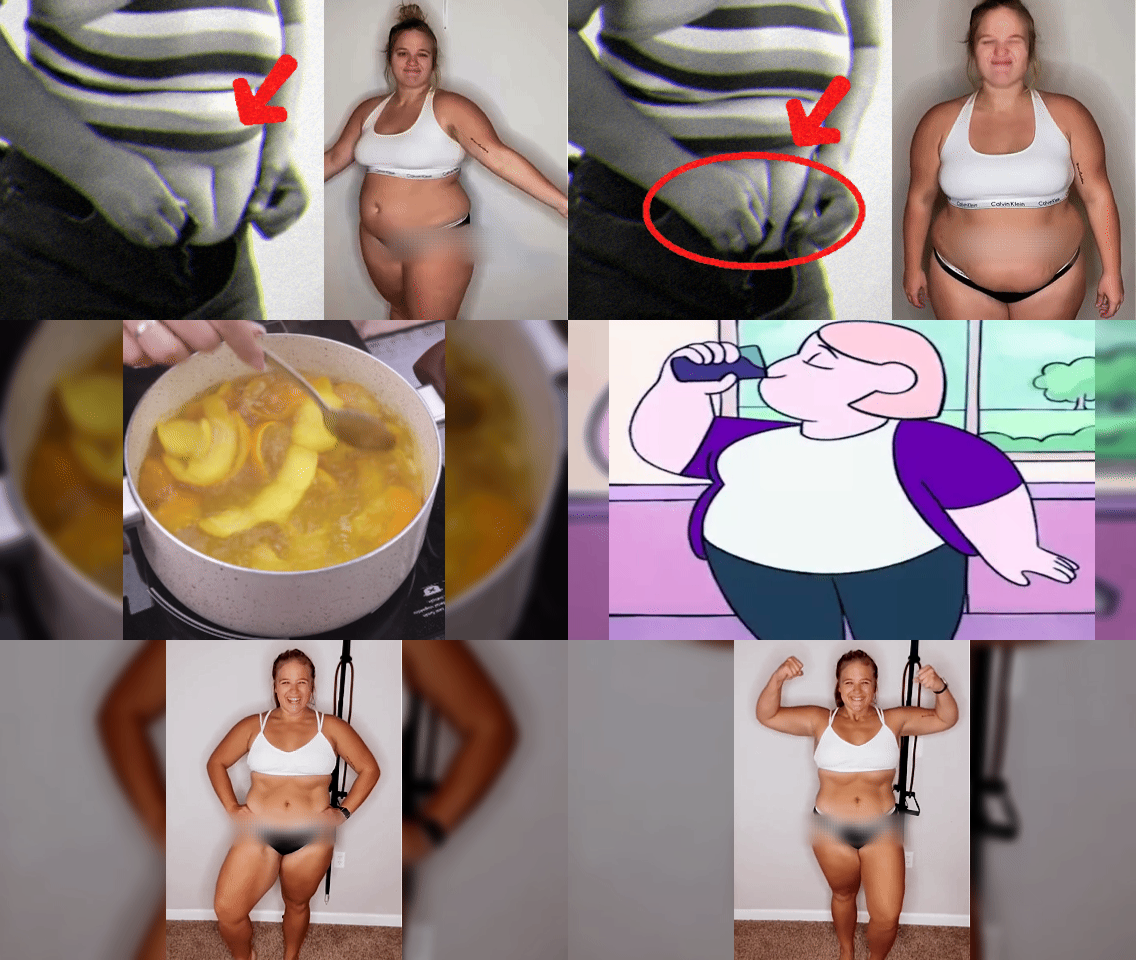
For decades, millions of people have followed the same advice: eat less, exercise more, and stay disciplined. Yet many describe the exact same experience—they lose some weight, only to gain it all back a short time later.
So why does this keep happening?
That is the central question explored in a Video Sales Letter (VSL) reviewed by our editorial team. The presentation introduces a theory suggesting that most traditional weight-loss strategies focus on treating the symptoms rather than addressing what it describes as the underlying cause.
A Frustration Shared by Millions
The story follows a man who says he spent years struggling with excess weight.
According to his account, he tried nearly every well-known approach available, including low-fat diets, low-carb diets, intermittent fasting, commercial weight-loss programs, and regular exercise. While he occasionally lost weight, the results never seemed to last.
The video also describes the emotional toll of this experience: clothes that no longer fit, embarrassment about his appearance, declining self-confidence, strain on his marriage, and growing concerns about his health.
The Experience That Changed Everything
The narrator says he eventually turned to modern weight-loss medications but claims he experienced a serious health complication after taking them.
According to the VSL, everything changed during a business trip to Japan, where he met a physician who offered a completely different explanation for why so many people struggle to lose weight.
The doctor reportedly suggested that excess weight is not simply the result of eating too much or exercising too little.
Instead, the presentation argues that many people remain trapped in an unfavorable metabolic state associated with what it refers to as “oxidative stress,” making it more difficult for the body to use stored fat as a source of energy.
What the VSL Calls the “Nagano Secret”
Much of the story centers on Japan’s Nagano region.
According to the video, the area is known for having one of the highest life expectancies in the world and remarkably low obesity rates.
The proposed explanation is that many local residents regularly consume a traditional herbal beverage that has been part of the region’s culture for generations.
The VSL further claims that researchers observed certain naturally occurring compounds in these plants—particularly catechins and polyphenols—that may support metabolic processes involved in how the body uses stored fat for energy.
The presentation describes this concept as the key distinction between its theory and conventional weight-loss approaches.
Scientific References Mentioned
Throughout the presentation, several well-known institutions are referenced, including Harvard Medical School, Johns Hopkins, Tufts University, and the International Journal of Obesity.
According to the VSL, these references support the broader idea that metabolic processes and oxidative stress may play an important role in body weight regulation.
However, the presentation does not provide enough detail to independently determine whether all of its conclusions accurately reflect the findings of the studies it cites.
The Ingredients Discussed
The beverage described in the presentation is said to contain a blend of naturally occurring ingredients, including:
- Catechins
- Polyphenols
- Cassia cinnamon
- Ashwagandha
- Plant compounds derived from various herbs and roots
According to the narrative, the effectiveness comes from the combination of these ingredients rather than from any single component alone.
These claims are presented as part of the VSL’s narrative and are not independently verified within the material itself.
Reported Results
To reinforce its message, the VSL features multiple testimonials from individuals who claim to have achieved significant weight-loss results.
Among the figures mentioned are reported weight losses of more than 40 pounds and up to 59 pounds. The presentation also claims that approximately 194,984 people have used the approach, with an average reported weight loss of 26.4 pounds.
These figures are presented by the VSL as success stories but are not accompanied by documentation that would allow their methodology or authenticity to be independently verified.
A Critique of Conventional Approaches
Another recurring theme throughout the presentation is criticism of the pharmaceutical industry and the market for foods labeled as “diet” or “healthy.”
According to the VSL, these industries prioritize ongoing treatments and products that address symptoms rather than the root cause of excess weight.
This viewpoint reflects the argument presented in the video and is not independently substantiated within the material reviewed.
What Can We Take Away?
Rather than simply presenting a weight-loss method, the VSL follows a narrative structure commonly seen in health-related marketing.
It begins by highlighting a frustration shared by millions of people.
Next, it challenges conventional explanations for that problem.
It then introduces a little-known biological mechanism, connects it to scientific references, and builds a personal transformation story designed to make the discovery more compelling.
Regardless of whether the claims ultimately prove accurate, the presentation illustrates how personal storytelling, simplified scientific concepts, and references to research can be combined to create a highly persuasive narrative.
For readers, the most important takeaway is to distinguish between hypotheses presented in promotional materials and well-established scientific evidence, and to seek reliable sources and qualified healthcare professionals before making decisions about weight management or treatment.
Copyright © 2024 Health Pro News LLC – All Rights Reserved
This site and the products and services offered on this site are not associated, affiliated, endorsed, or sponsored by Clickbank, nor have they been reviewed, tested, or certified by Clickbank.